



For many, the struggle with sleep isn’t about physical exhaustion, it’s about a mind that refuses to shut down. You climb into bed exhausted, yet the moment your head hits the pillow, your brain begins a “marathon” of checklists, worries, or repetitive thoughts.
If you are asking, “can hypnosis help insomnia,” the answer lies in understanding the relationship between your conscious desire to sleep and your subconscious drive to stay active.
Why Your Mind Stays Active at Night
An active mind at night is rarely a glitch; it is usually a functional response from the subconscious. From a professional perspective, nighttime mental activity is often the result of “unresolved data” or “open loops.”
During the day, distractions help keep thoughts in the background:
- Work
- Phones
- Conversations
- Responsibilities
- Constant stimulation
But at night? Everything gets quiet. And suddenly, unresolved stress, emotional tension, and subconscious processing rise to the surface.
This is why many people experience:
- Racing thoughts at bedtime
- Anxiety before sleep
- Waking up in the middle of the night
- Difficulty falling back asleep
Your subconscious mind is still trying to process, protect, or resolve something internally. If it perceives that there are unresolved problems from your day or looming threats in your tomorrow, it will keep the “engine running” to try and solve them. This is why willpower often fails to bring on sleep; you cannot simply “command” a protective mechanism to turn off.
Can Hypnosis Help Insomnia by Calming the Subconscious Mind?
Most people attempt to manage insomnia using external tools:
- White noise machines
- Strict bedtime routines
- Sleep supplements
- Relaxation apps
While these approaches may provide temporary relief, they often focus on suppressing symptoms rather than addressing the underlying mental activation. The moment attention drifts, the racing thoughts can quickly return.
Professional hypnosis approaches insomnia differently. Instead of trying to overpower the mind, hypnosis sessions works with the subconscious to help resolve the patterns that keep the nervous system active.
This process may involve:
- Close the “Open Loops”: Neutralizing the emotional charge of the day’s events.
- Update the Safety Signal: Communicating to the subconscious that it is safe to deactivate the “vigilance” mode.
- Reset the Default State: Establishing a calm baseline that allows the body’s natural sleep cycles to take over.
How Hypnosis Interacts with Sleep Cycles
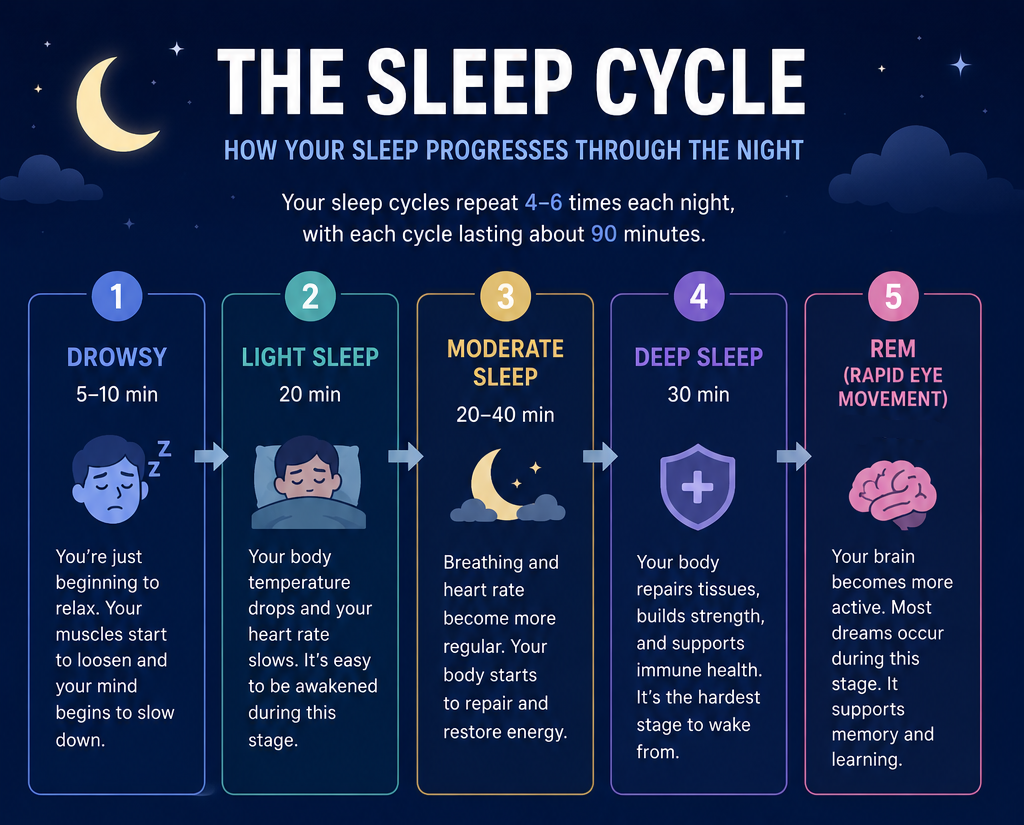
The science of sleep involves moving from the high-frequency Beta waves of active thinking into the slower Alpha, Theta, and Delta waves of deep rest.
Insomnia often occurs because the mind remains “stuck” in a high-frequency state. Guided hypnosis provides a professional protocol to guide the mind through these transitions. By speaking directly to the “engine room” of the subconscious, we can bypass the analytical “chatter” and facilitate the shift into a state of natural composure.
Instead of forcing sleep, hypnosis sessions help the mind move into a calmer, more regulated state naturally.
Signs Your Insomnia May Be Stress-Driven
You may benefit from subconscious-based sleep support if you:
- Feel tired but mentally active
- Wake up thinking immediately
- Experience nighttime anxiety
- Overthink while trying to sleep
- Feel emotionally overwhelmed during the day
- Cannot fully relax even during downtime
These patterns are often connected to subconscious stress activation.
What Happens When the Root Trigger Is Addressed?
When the underlying cause of nighttime mental activity begins to resolve, sleep no longer feels like a struggle or performance.
A Quieter Mind
The constant mental “chatter” begins to settle because the subconscious no longer feels compelled to stay on high alert.
More Natural Sleep
You move through sleep cycles with fewer internal interruptions caused by stress or hypervigilance.
Better Emotional Regulation
You wake up feeling calmer, clearer, and more mentally prepared for the day ahead.
A More Natural Approach to Sleep Support
If you are tired of “managing” your exhaustion and are ready to resolve the patterns keeping you awake, it may be time to look at the subconscious root. Family First Hypnosis focuses on helping clients in Plano, Frisco, McKinney, Richardson, and Allen and virtually anywhere calm the subconscious patterns that keep the mind active at night.
Because sleep is not always about “trying harder” to rest.
Sometimes, it’s about helping the mind finally feel safe enough to let go.
Ready for a Quiet Mind?
If you’ve been asking yourself, can hypnosis help insomnia?, you may be dealing with more than just poor sleep habits.
You may be experiencing a subconscious mind that has been stuck in stress and overactivity for too long.
You’re invited to schedule a free 30-minute consultation with Family First Hypnosis and discover how hypnosis with a professional may help you calm your mind, sleep more deeply, and finally wake up feeling rested again.