


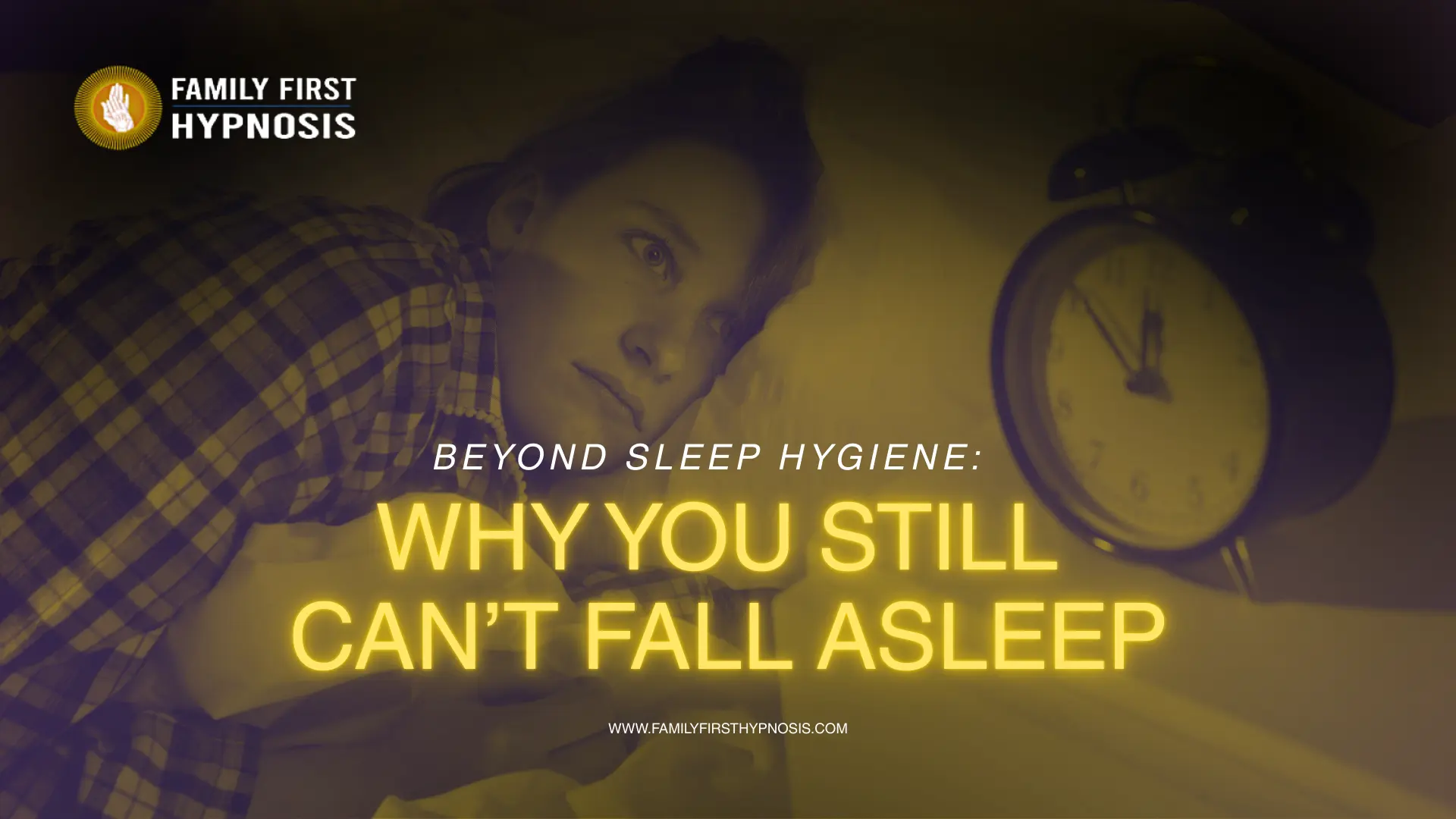
If you struggle with sleep, you’ve likely spent hours (and probably a lot of money) trying to fix it. Usually, the complaints fall into two categories: “I can’t get to sleep” or “I can’t stay asleep.” Sometimes, it’s both.
From supplements to high-tech bedding, the list of “solutions” is endless. But if you’ve checked every box and you’re still staring at the ceiling late at night, it’s time to look deeper. In this video, Celeste Hackett explores the vast world of sleep aids and explains why guided hypnosis to fall asleep often succeeds where “hygiene” fails.
Watch Celeste Explain Why Some Sleep Solutions Don’t Work
The “Everything But” List
Most people come to Family First Hypnosis after they have tried everything else. Do any of these look familiar to you?
- Environmental Fixes: Blackout curtains, eye masks, earplugs, white noise, and cooling bedding.
- Physical Routines: Weighted blankets, grounding, warm or cold showers, and progressive relaxation.
- The “Supplements” Cabinet: CBD gummies, sour cherry, nutmeg, lemon balm, or passionflower.
- Mental Distractions: Reading something boring, deep breathing, or simple sleep recordings.
What is Sleep Hygiene?
You may have heard the term “Sleep Hygiene.” It is a set of habits and environmental choices designed to promote sleep. It usually falls into three categories:
- Bedtime Rituals: Journaling, stretching, or meditation.
- Daily Habits: Getting sunlight in your eyes first thing in the morning.
- The Sleep Environment: Keeping your room cool, dark, and quiet.
These experiences are based on chronobiology—the science of our internal biological clock. This master clock, known as the suprachiasmatic nucleus, regulates our circadian rhythm. This 24-hour cycle controls everything from hormone release to digestion.
Why Science and Habits Sometimes Fail
Here is the catch: You can have the perfect room, the perfect supplements, and a perfect circadian rhythm, and still not be able to sleep. Sometimes the problem isn’t the routine. Why? Because sleep is a natural, automatic process governed by the subconscious mind. If your subconscious is “on high alert”—processing the day’s stresses, worrying about tomorrow, or holding onto a “bad feeling” inside—no amount of blackout curtains will force your brain to shut down.
When you focus only on “hygiene,” you are treating the symptoms. When you use hypnosis to fall asleep, you are reaching the root. This is where working directly with the subconscious mind can be helpful.
Reaching the Subconscious Root
Guided hypnosis is often used as a supportive approach to help the mind settle into a calmer state of awareness. At Family First Hypnosis, we believe that true rest is a cornerstone of Human Flourishing. You shouldn’t have to “fight” for sleep every night.
Rather than forcing sleep, by working with a professional hypnotist, you can:
- Calm the Alert System: Update the subconscious so it feels safe to “let go” of the day.
- Neutralize Internal Noise: Address the feelings and thoughts that keep the mind racing.
- Restore Your Natural Rhythm: Align your subconscious expectations with your body’s biological clock.
Many clients describe feeling mentally quieter and more relaxed after sessions. This can make it easier for the mind and body to move naturally toward sleep.
Hypnosis Sessions for Sleep Support at Family First Hypnosis
At Family First Hypnosis, Celeste works with clients who experience:
- Difficulty falling asleep
- Difficulty staying asleep
- Overactive thoughts at night
- Stress that interferes with sleep
Gentle Call to Action
If you’re tired of trying countless sleep solutions and still wondering why sleep feels so difficult, it may be time to explore a different approach.
If you are in Plano, Dallas, or anywhere in the world via our virtual sessions, we are here to help you get your questions answered and finally experience the deep, restorative sleep you deserve.
Would you like to schedule a free 30-minute phone consultation and discuss how hypnosis to fall asleep can help you quiet the night?